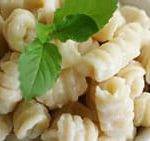
Freezing Uncooked Gnocchi
This is the ideal way to preserve and maintain the chewy consistency of gnocchi after freezing. Start by making the gnocchi from scratch, placing each dumpling in a floured, parchment-lined baking pan. Once you’re done, leave the gnocchi to air dry at room temperature for an hour up to four hours. This step is important because it helps retain the chewiness of the gnocchi once defrosted.
Once air-drying is done, stick the pan in the freezer and leave the gnocchi to freeze for 2 to 3 hours. When the dumplings are frozen solid, take the tray out of the freezer. With a resealable plastic bag, place the gnocchi one by one. When the plastic bag is filled with gnocchi, squeeze out as much air as you can, seal, then stick in the freezer.
How to Defrost and Reheat Frozen Gnocchi?
To defrost gnocchi, simply transfer the dumplings from the freezer to the fridge. Leave the gnocchi to thaw for several hours to overnight. It is important that the dumplings be completely thawed before reheating or cooking. Now let’s take a look at how to reheat frozen gnocchi properly:
Cooking Thawed Uncooked Gnocchi
For defrosted, uncooked gnocchi, boil a pot of water then drop the thawed gnocchi one by one. Since the gnocchi has been defrosted, it will take some time before each one floats, which takes 2 minutes or so. When the gnocchi floats, it is done cooking. Just scoop all the floating gnocchi and cook as directed in the recipe.
Freezing Cooked Gnocchi
Gnocchi is best frozen uncooked because the dumplings have the tendency to soften too much once reheated. But if you have excess cooked gnocchi, you can still freeze the dumplings. If you made too much gnocchi than you can handle, separate the dumplings that you need to freeze and hold off the sauce. You can add the sauce after thawing and reheating the dumplings.
Sprinkle a little flour and toss the gnocchi before spooning the dumplings into a resealable plastic container. The flour will prevent the dumplings from sticking together. Squeeze the air out before sealing then write the storage date with a marker. Finally, stick in the freezer. If you have a vacuum sealer, use it to lock in the freshness.
Freezing Leftover Gnocchi
If say, you have some leftover gnocchi (sauce and all), it’ll be hard to freeze the dumplings without changing the texture. Because the gnocchi has been cooked completely, reheating will turn the dumplings mushy. If that’s fine with you, just spoon the leftover gnocchi into an airtight container, close the lid, write the storage date then stick in the freezer.
How to Defrost and Reheat Frozen Gnocchi?
Reheating Leftovers Using the Microwave
For leftover sauced gnocchi, you can reheat the dish in the microwave. Transfer the dumplings to a microwave-safe bowl, stick in the microwave and nuke on high at 10 seconds intervals or until gnocchi is reheated thoroughly.
Reheating Leftovers Using the Stove
Pour the leftover, sauced gnocchi into a skillet and simmer on low until the dumplings are heated through. You can add a little more of the sauce if the dish becomes too dry. At this point, you can also add your favorite mix-ins, such as parmesan cheese, olive oil, etc. When the gnocchi is cooked through, serve immediately.
Cooking Thawed Cooked Gnocchi
Cook the gnocchi as directed in the recipe. Prep the defrosted gnocchi the same way as fresh gnocchi.
When roasting a whole chicken, it is best to use an internal meat thermometer, such as an iGrill® to ensure that your roast is perfectly cooked. For best results, it is important that your probe placement is accurate.
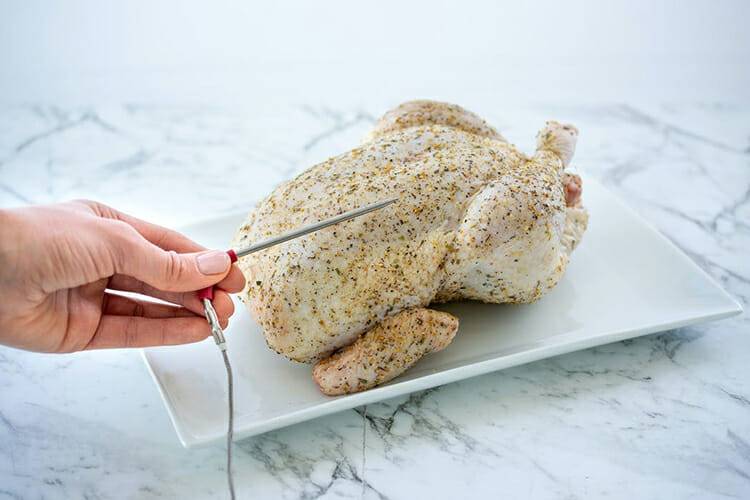
The best place to insert a probe into a whole chicken is deep into the breast. Using the length of the probe, measure three quarters along the breast, marking on the probe with your fingers.
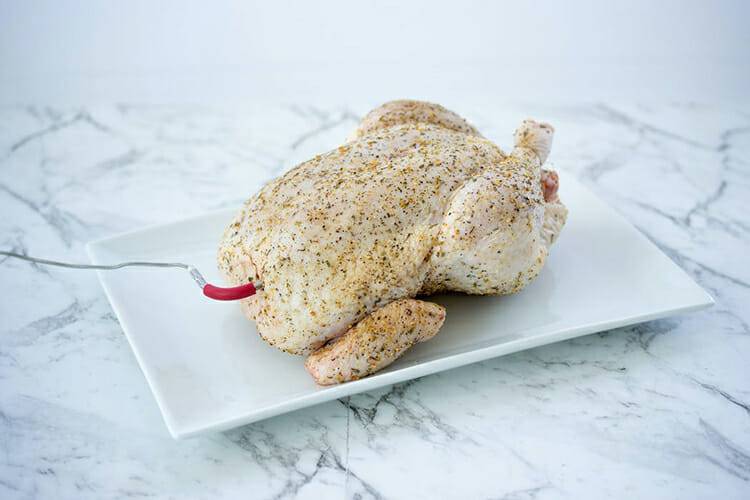
Keeping your fingers marked on the probe, insert the probe through the front of the breast. Avoid touching any bones. If the probe is touching any bones or if it has gone through to the cavity the temperature will read incorrectly.
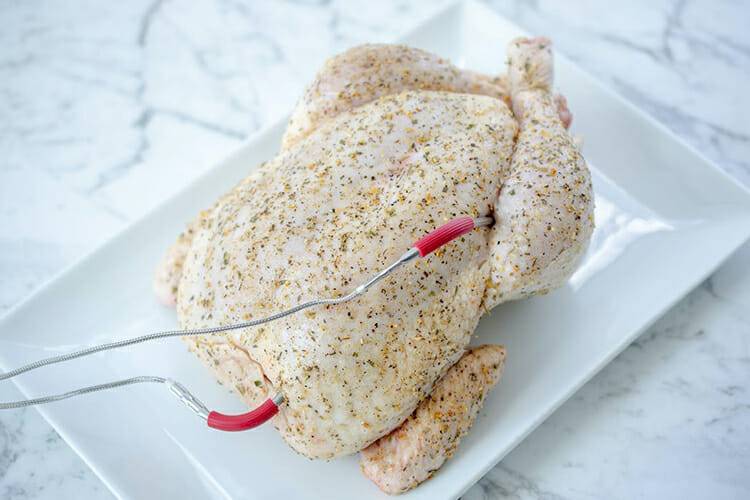
If you have a second probe, you can insert another probe into the thickest part of the chicken thigh.
Cook to Internal Temperature of 83℃. {Hark Smoker directions}
What we are making here today is about the consistency of butter at room temperature and is great for frying, deep frying, Yorkshire puddings and other cooking where you need a fat with a deep rich flavour.
Just get as much muscle fat as the butcher will give you, trim out most of the muscle that's left in it, and chop it coarsely.
No need to grind it fine, or remove every last piece of flesh - you can do those things if you really believe it needs to be done... but I don't, my Grandmother didn't and it's always fantastic.
Another piece of advice that most give is to put water in the bottom of the pot - "so it won't burn" - no need for that either... you are setting your oven at 107℃ to 120℃ and beef fat doesn't start to smoke until over 204℃.
So unless your oven is waaaaaaay off there is no real danger of it burning. Adding water just causes problems later because you need to boil it off.